
INFINITE ROOFING
EPDM Rubber Roofing in Surrey
EPDM rubber roofing is a popular choice for flat and low-pitched roofs, offering flexible, weather-resistant waterproofing for residential and commercial properties. When correctly specified and installed, an EPDM membrane can provide reliable protection against rainfall, changing temperatures and general weather exposure for many years.
Infinite Roofing provides roofing services throughout Surrey, including Epsom, Leatherhead, Cheam, Banstead, Ewell, Tadworth, Kingswood and Ashtead.
Whether you are planning a new flat roof for an extension, replacing an ageing garage roof or investigating problems with an existing rubber roof, we can assess the property and recommend a suitable roofing solution.
Our approach focuses on the condition of the roof, the requirements of the building and the long-term performance of the chosen waterproofing system.
Contact Infinite Roofing to discuss your EPDM rubber roofing requirements and request a free, no-obligation quotation.
What Is EPDM Rubber Roofing?
EPDM stands for ethylene propylene diene monomer, a synthetic rubber material used in a variety of construction and waterproofing applications.
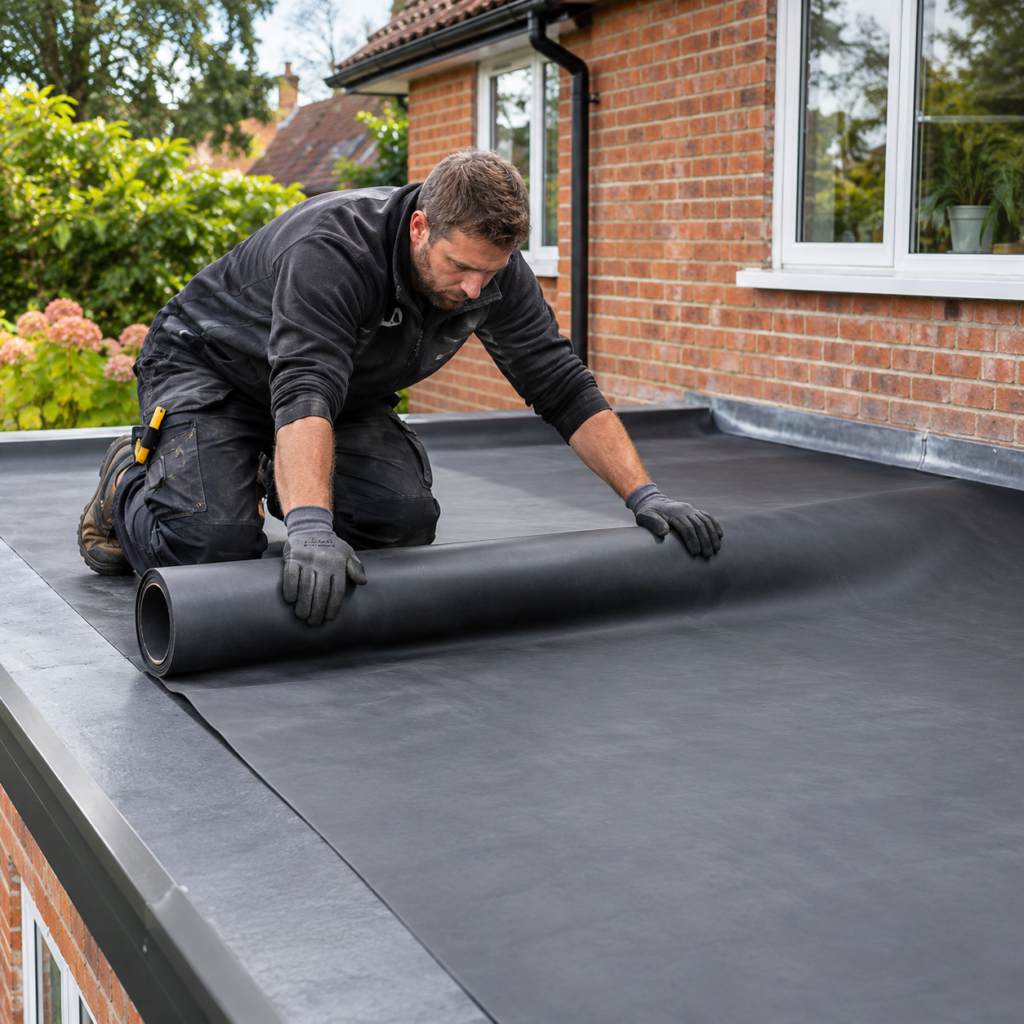
In roofing, EPDM is supplied as a flexible membrane designed to form a waterproof covering over a suitable roof structure.
Its flexibility allows it to accommodate normal thermal expansion and contraction, making it well suited to many flat and low-pitched roofing applications.
Unlike traditional roofing felt, which commonly involves multiple layers, EPDM systems can often be installed using large sheets of membrane, reducing the number of field seams required.
However, the installation method depends on the roof dimensions, substrate, specification and manufacturer’s requirements.
The membrane must be correctly bonded, secured or otherwise installed using an approved system. Special attention is required around roof edges, drainage outlets, wall junctions and roof penetrations.
When these details are handled correctly, EPDM provides an effective waterproof barrier for a wide variety of roofs.
Benefits of EPDM Rubber Roofing
EPDM has become an established flat roofing option because of its combination of flexibility, durability and relatively straightforward maintenance requirements.
Flexible Waterproof Protection
Rubber roofing membranes are designed to accommodate normal movement caused by changing temperatures.
This flexibility can be particularly useful on roofs exposed to regular cycles of heating and cooling.
However, flexibility alone does not guarantee a watertight installation. Correct detailing and suitable preparation remain essential.
Resistance to Weather Exposure
EPDM is designed to withstand prolonged exposure to outdoor conditions, including rain, ultraviolet radiation and temperature changes.
A suitable membrane system can maintain its waterproofing performance over a lengthy service life when installed and maintained correctly.
Fewer Field Seams
EPDM membranes are available in relatively large sheets, allowing some domestic roofs to be covered with few or no field seams.
Reducing unnecessary seams can simplify certain installations, although joints, edges and penetrations must still be carefully waterproofed.
Suitable for Different Roof Shapes
Rubber roofing can be used on a range of flat and low-pitched roof arrangements.
The suitability of a particular system depends on the roof’s design, drainage, supporting structure and manufacturer requirements.
Long-Term Value
The initial cost of EPDM roofing should be considered alongside its expected service life and maintenance requirements.
A correctly installed system may offer good long-term value, particularly where an existing roof requires complete replacement.
EPDM Rubber Roof Installation in Surrey
Installing a rubber flat roof involves considerably more than laying a membrane over an existing surface.
The roof must be assessed to determine whether the supporting structure is suitable and whether any existing damage needs attention.
A sound, appropriately prepared substrate is essential for reliable waterproofing.
Depending on the project, installation work may involve removing an existing roof covering, inspecting the decking, replacing damaged materials and preparing the surface for the chosen membrane system.
Roof Preparation
Before installing the membrane, the roof structure and substrate should be checked for defects.
Deteriorated timber, saturated insulation or unsuitable existing coverings may need to be removed or repaired.
The roof must also provide suitable falls towards drainage outlets.
Flat roofs are not intended to be completely level. Appropriate drainage helps prevent unnecessary water accumulation and supports the performance of the waterproofing system.
Installing the Membrane
EPDM is commonly installed using compatible adhesives or other approved attachment methods, depending on the system.
The installation must follow the manufacturer’s requirements for surface preparation, bonding, joints and detailing.
Careful workmanship is particularly important around corners and changes in roof level.
Completing Roof Edges and Junctions
The perimeter of the roof must be correctly detailed to prevent water entering beneath the membrane.
This includes suitable treatment of roof edges, upstands, wall junctions and any penetrations.
Where the roof connects to another part of the building, the waterproofing must accommodate the construction and expected movement of the adjoining materials.
The finished roof should provide a continuous waterproof barrier with effective drainage.
Rubber Roofing for House Extensions
Flat-roofed extensions are common throughout Surrey, particularly on established residential properties where additional living space has been created.
EPDM can be a suitable waterproofing option for some single-storey extensions, kitchen extensions and similar projects.
Its flexibility and availability in large sheets make it worth considering where roof dimensions and construction are appropriate.
However, the finished roofing system must work with the overall extension design.
Important considerations include insulation, ventilation, roof falls, drainage and the connection between the new roof and the original building.
Where rooflights are included, their position and surrounding waterproofing require careful planning.
An extension roof should be designed as a complete system rather than treating the waterproof covering as an isolated component.
Infinite Roofing’s residential roofing services cover a range of domestic roofing requirements, including roofing work on extensions and other residential structures.
EPDM Roofing for Garages and Outbuildings
Garages, workshops, porches and garden buildings frequently incorporate flat or low-pitched roofs.
Many older structures use traditional felt coverings that may eventually require repair or replacement.
Where the supporting construction is suitable, EPDM can provide an alternative waterproofing system.
For garage roof replacements, the condition of the existing roof decking is particularly important.
If timber has suffered prolonged water damage, installing a new membrane directly over the damaged structure will not resolve the underlying problem.
The roof must also be suitable for the proposed installation method and expected loads.
Other considerations include the position of drainage outlets, roof-edge detailing and whether the structure is attached to another building.
A professional assessment can establish whether EPDM is appropriate or whether another roofing system would provide a better solution.
EPDM Rubber Roof Repairs
Although EPDM is designed for long-term waterproofing performance, damage can still occur.
Problems may develop through physical impact, defective installation, incompatible materials, ageing details or changes to the roof structure.
Common issues include:
- Punctures or tears in the membrane
- Failed seams or joints
- Deteriorated roof-edge details
- Poorly sealed roof penetrations
- Damage around rooflights
- Defective drainage outlets
- Separation at wall junctions
- Mechanical damage caused by rooftop work
A damaged EPDM roof does not automatically require complete replacement.
Where the membrane remains generally sound, some defects can be repaired using compatible materials and approved techniques.
However, the correct repair method depends on the original roofing system and the nature of the damage.
A repair product designed for another membrane type may not be appropriate for EPDM.
We can assess roofing defects and advise whether a suitable repair or more extensive refurbishment should be considered.
For other types of roofing problems, explore our wider roofing services.
When Should an EPDM Roof Be Replaced?
Roof replacement may be necessary when the existing covering has deteriorated beyond economical repair.
However, age alone should not determine whether a rubber roof needs replacing.
A well-installed roof that has received appropriate maintenance may remain serviceable for a considerable period.
The decision should reflect the actual condition of the membrane, its junctions and the supporting structure.
Replacement may be worth considering where there is widespread membrane damage, repeated water penetration, extensively deteriorated details or significant moisture damage beneath the covering.
A roof with multiple previous repairs may also benefit from a more comprehensive assessment.
Where defects are isolated and the surrounding materials remain sound, repair may still be appropriate.
We aim to recommend work based on the condition of the individual roof rather than assuming that replacement is always necessary.
How Long Does EPDM Rubber Roofing Last?
One of the main attractions of EPDM is its potential for a long service life.
Some correctly designed and installed EPDM roofing systems can remain functional for several decades.
However, no contractor should promise a specific lifespan without considering the membrane specification, installation and environmental conditions.
Factors influencing longevity include:
- Quality and thickness of the membrane
- Installation workmanship
- Condition of the substrate
- Roof drainage
- Exposure to mechanical damage
- Quality of joints and perimeter detailing
- Maintenance and inspection practices
- Compatibility with other roofing materials
The membrane itself is only one part of the roofing system.
Poor drainage, defective flashing or an unsuitable supporting structure can cause problems even when the rubber covering remains in reasonable condition.
Regular inspections can help identify defects before they lead to wider deterioration.
EPDM Rubber Roofing Compared with Other Flat Roofing Systems
EPDM is one of several flat roofing materials used on UK properties.
Understanding the differences between these systems can help homeowners make informed decisions.
EPDM and Traditional Roofing Felt
Traditional bituminous felt roofing commonly uses multiple layers to form a waterproof covering.
EPDM generally uses a flexible synthetic rubber membrane.
Both can provide effective waterproofing when correctly specified and installed, but they differ in their materials, jointing methods and installation requirements.
EPDM and GRP Fibreglass
GRP fibreglass roofing forms a comparatively rigid waterproof surface using resin and reinforcement.
EPDM remains flexible and can accommodate normal movement differently.
The suitability of either system depends on roof construction, design and intended use.
EPDM and Single-Ply Roofing Systems
Several other synthetic membranes are available for flat roofing, including systems joined using heat-welded seams.
Infinite Roofing also offers specialist Alwitra Evalon roofing, which uses a different waterproofing membrane technology from EPDM.
The two materials should not be treated as interchangeable.
Each system has its own installation methods, technical characteristics and detailing requirements.
The best choice is determined by the individual roof rather than simply selecting whichever material is most familiar.
Common Problems Affecting Rubber Flat Roofs
Flat roofing problems do not always originate from damage to the main membrane.
Some of the most vulnerable areas are the junctions and details surrounding the waterproof covering.
Poor Drainage
Blocked outlets or inadequate falls can allow water to accumulate.
Persistent ponding should be assessed, particularly where structural deflection or inadequate drainage may be involved.
Defective Wall Junctions
Where a flat roof meets a wall, the waterproofing must be correctly terminated and protected.
Failed detailing can allow water to enter behind the membrane.
Rooflight Leaks
Rooflights create penetrations through the roof covering.
Defective detailing around their frames can result in water penetration even when the surrounding membrane is otherwise sound.
Damage from Foot Traffic
Some flat roofs are not intended for regular access.
Walking on unsuitable roof surfaces or placing equipment directly onto the covering can cause damage.
A proper inspection helps distinguish between membrane failure, drainage defects and problems with the surrounding roof construction.
How Much Does EPDM Rubber Roofing Cost in Surrey?
The cost of an EPDM rubber roof depends on the size and complexity of the project.
A small garage roof with straightforward access will generally involve different costs from a large extension with rooflights, parapet walls and complicated drainage.
Factors influencing the quotation include:
- Total roof area
- Condition of the existing roof
- Removal and disposal requirements
- Replacement decking or insulation
- Membrane specification
- Number of corners and roof penetrations
- Roof-edge details
- Drainage arrangements
- Scaffolding and safe access
- Labour and installation complexity
The cost should be assessed against the complete roofing system, not simply the price of the membrane.
A cheaper installation that omits necessary preparation or suitable detailing may create expensive problems later.
We can discuss the roofing work required and provide a quotation based on the actual property.
EPDM Roof Maintenance
EPDM roofs generally require relatively modest routine maintenance, but they should not be considered completely maintenance-free.
Regular inspections can help identify problems with drainage, roof edges and surrounding waterproofing details.
Useful maintenance measures include:
- Keeping outlets clear of leaves and debris
- Monitoring areas of persistent standing water
- Checking roof-edge components
- Watching for visible membrane damage
- Investigating internal damp patches
- Checking rooflight and wall junctions
- Arranging professional inspections when defects are suspected
Avoid walking on a flat roof unless it has been assessed as suitable for access and appropriate safety precautions are in place.
Some roof structures and rooflights can be fragile, and falls from height remain a serious risk.
Where repairs are required, materials should be compatible with the existing EPDM system.
EPDM Rubber Roofing Across Surrey
Infinite Roofing is based in Epsom and provides roofing services throughout the surrounding parts of Surrey.
Our local coverage includes:
- Epsom
- Cheam
- Leatherhead
- Banstead
- Ashtead
- Ewell
- West Ewell
- Tadworth
- Kingswood
Whether you are replacing a garage roof, planning a home extension or investigating a leaking flat roof, contact us to discuss the property and check coverage.
Why Choose Infinite Roofing?
Choosing a roofing contractor involves more than comparing the cost of materials.
The performance of a flat roof depends on the suitability of the chosen system, the preparation beneath it and the quality of the completed waterproofing details.
Infinite Roofing has extensive experience across residential and commercial roofing, including
Need some help?
Our team of highly skilled roofers are waiting for your call


