
INFINITE ROOFING
GRP Fibreglass Roofing in Surrey
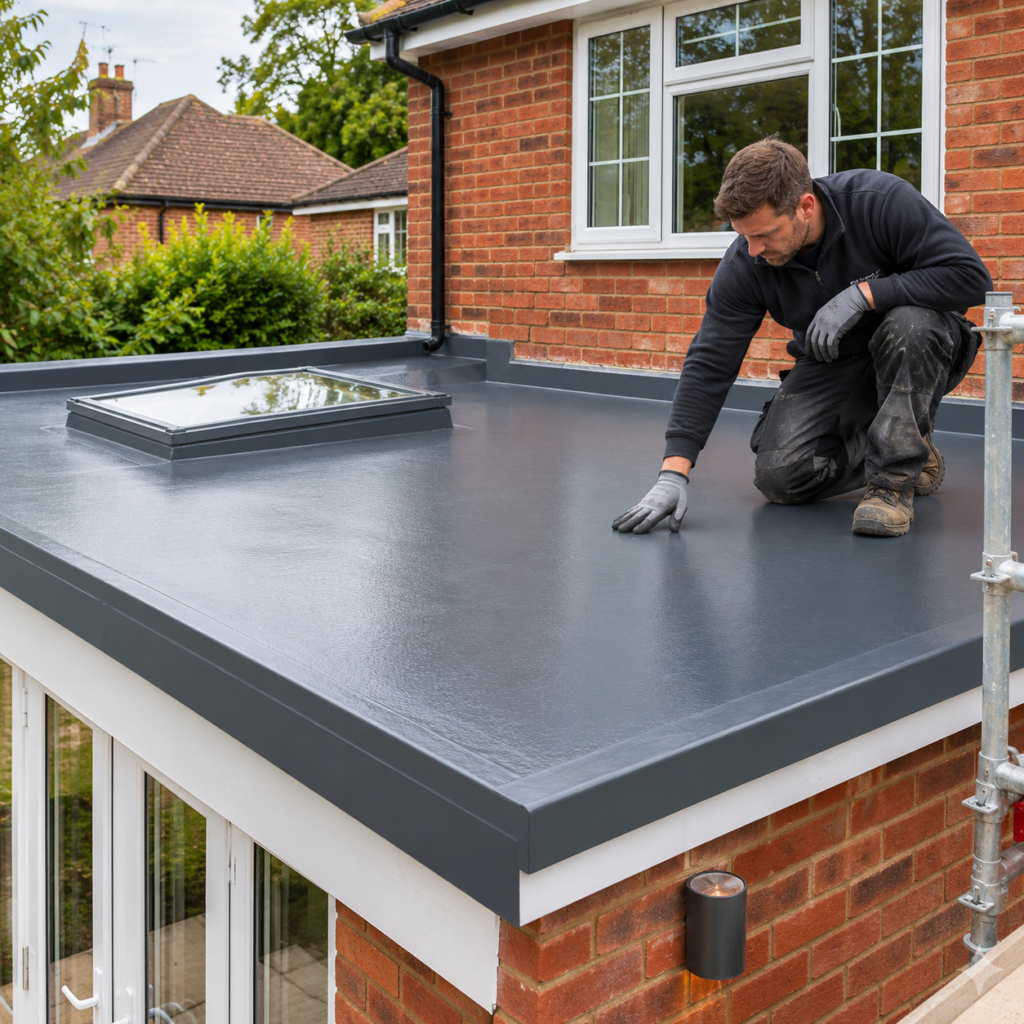
GRP fibreglass roofing is a durable, versatile waterproofing solution commonly used on flat roofs, extensions, garages, dormers and other residential or commercial structures. When correctly specified and installed, it creates a tough, continuous roof covering designed to protect buildings against the British weather.
Infinite Roofing provides professional fibreglass roofing services throughout Surrey, including Epsom, Leatherhead, Cheam, Banstead, Ewell, Tadworth and surrounding areas.
Whether you are replacing an ageing flat roof, planning a new extension or investigating a damaged fibreglass covering, we can assess your requirements and recommend a suitable roofing solution.
GRP roofing offers several practical advantages, including a seamless surface, robust construction and a neat, modern finish. However, the quality of the supporting structure, drainage and installation details is just as important as the finished waterproof covering.
Our aim is to provide a reliable roofing system suited to your property, with careful attention to the areas where flat roofs are most vulnerable to leaks.
Contact Infinite Roofing to discuss your fibreglass roofing project and request a quotation.
What Is GRP Fibreglass Roofing?
GRP stands for Glass Reinforced Polyester, a composite material made by combining polyester resin with glass fibre reinforcement.
During installation, layers of resin and fibreglass matting are applied to a suitable roof deck. Once cured, they form a solid waterproof laminate, which is normally finished with a protective topcoat.
Unlike roofing systems that rely on multiple overlapping sheets, a properly installed GRP roof forms a continuous covering across the main roof surface.
This makes fibreglass particularly suitable for many domestic flat roofs, where effective waterproofing around corners, edges and adjoining structures is essential.
GRP has been used in construction and other industries for decades. Its combination of strength, versatility and mouldability allows it to be used in a wide range of applications.
However, not every GRP system is identical. Different manufacturers specify their own resins, reinforcement, trims, substrates and installation procedures.
Correct installation therefore requires a system appropriate to the roof’s design and intended use.
Benefits of Fibreglass Roofing
GRP roofing is a popular option for homeowners seeking a durable alternative to traditional flat roof coverings.
Its suitability depends on the individual property, but it offers several advantages.
Seamless waterproof protection
A correctly installed GRP system creates a continuous waterproof surface.
This reduces the reliance on overlapping sheets across the main roof area, although junctions, trims and penetrations still require careful detailing.
Strong, rigid construction
Once cured, the fibreglass laminate forms a hard, reinforced covering capable of resisting normal weather exposure.
It can provide good durability when installed over a suitable, stable substrate.
Low maintenance requirements
GRP roofs generally require relatively straightforward routine maintenance.
Keeping drainage outlets clear, monitoring the protective finish and inspecting vulnerable details can help preserve the roof’s condition.
Attractive appearance
Fibreglass roofing provides a smooth, uniform finish suited to many modern extensions, garages and residential properties.
Different finishes may be available depending on the system.
Adaptable detailing
GRP can be formed around appropriate roof shapes and details, making it useful for certain roofs with complicated edges, upstands and corners.
These benefits depend on correct design, suitable materials and installation in accordance with the manufacturer’s requirements.
Where Can GRP Fibreglass Roofing Be Used?
Fibreglass roofing is suitable for various domestic and commercial applications.
We can assess GRP roofing requirements for:
- Single-storey extensions
- Garage roofs
- Porches and entrance canopies
- Dormer roofs
- Flat-roofed outbuildings
- Residential refurbishment projects
- Selected commercial flat roofs
- New-build and replacement roofing projects
The roof’s size, structural design, accessibility and intended use all influence the most appropriate waterproofing system.
For example, a small garage roof may have very different requirements from a large commercial roof containing ventilation equipment, rooflights and numerous penetrations.
Likewise, a roof intended for regular pedestrian access requires different consideration from one accessed only for occasional maintenance.
We assess these requirements before recommending an appropriate solution.
GRP Fibreglass Roofing for Extensions
Flat-roofed extensions are increasingly common on properties throughout Surrey.
Rear kitchen extensions, utility rooms and ground-floor living areas often incorporate low-pitched roofs because of their practical design and ability to accommodate rooflights.
GRP can provide an effective waterproofing solution for these structures.
However, a successful installation depends on more than applying resin and fibreglass to the roof surface.
Particular attention must be given to:
- The supporting roof deck
- Drainage falls
- Roof-to-wall junctions
- Rooflight openings
- Insulation and ventilation
- Waterproofing around penetrations
- Roof-edge details
- Movement within the supporting structure
One of the most important areas is the connection between the extension and the existing property.
If the flashing or waterproofing at this junction is defective, water may enter even when the main fibreglass covering remains sound.
We consider the complete roof construction when assessing a new installation or replacement.
Fibreglass Garage Roofing
Garage roofs are another common application for GRP fibreglass systems.
Many older garages have traditional felt or other roof coverings that may have deteriorated over time.
Problems such as cracking, failed joints, damaged edges and water penetration can make replacement necessary.
A new fibreglass roof may provide a suitable alternative, depending on the condition and design of the existing garage.
Before installation, the roof structure and supporting deck must be assessed.
If existing timbers or decking have suffered moisture damage, they may require replacement or structural attention before new waterproofing is installed.
Correct drainage is also important.
A garage roof that repeatedly collects water because of inadequate falls may need alterations rather than simply receiving a new surface covering.
The objective is to create a reliable roofing system, not conceal defects beneath a fresh waterproof layer.
New GRP Fibreglass Roof Installations
Installing a new fibreglass roof involves several stages, each contributing to the durability and performance of the completed system.
Although exact methods vary between manufacturers, the process generally includes the following.
1. Roof assessment and preparation
The supporting structure is assessed to establish whether it is suitable for the proposed roofing system.
This includes considering structural condition, drainage, insulation and access requirements.
2. Roof decking
GRP systems commonly require a suitable timber-based deck, installed and prepared in accordance with the selected manufacturer’s specification.
The deck must provide an appropriate surface for the waterproofing system.
Incorrect board selection, fixing or movement allowances can contribute to later problems.
3. Edge trims and detailing
Compatible trims are installed around roof edges, junctions and other required areas.
These components help create suitable waterproofing details and a neat finished appearance.
4. Fibreglass laminate application
Resin and glass fibre reinforcement are applied according to the selected roofing system.
Correct preparation, environmental conditions and application techniques are essential.
5. Protective topcoat
Once the laminate has reached the required stage of curing, a compatible protective topcoat is applied.
The final finish helps protect the underlying laminate and gives the roof its completed appearance.
Installation should follow the manufacturer’s requirements throughout, particularly regarding weather conditions, curing, materials and detailing.
GRP Fibreglass Roof Repairs
Although fibreglass roofing is designed to provide durable waterproofing, defects can still develop.
Damage may result from ageing, movement, impact, unsuitable installation or deterioration of individual roof details.
Common problems include:
- Cracking in the laminate
- Damage to the protective topcoat
- Failed roof-edge details
- Leaks around rooflights
- Defective wall junctions
- Movement-related cracking
- Localised impact damage
- Water penetration around roof outlets
Not every damaged fibreglass roof requires complete replacement.
Where defects are isolated and the surrounding materials remain in satisfactory condition, a compatible repair may provide an effective solution.
However, the condition of the supporting deck must also be considered.
If moisture has penetrated beneath the covering and damaged the substrate, repairing the surface alone may not resolve the problem.
Our wider roof repair services cover leaks, deteriorated waterproofing and other roofing defects across Surrey.
Common Problems with Poorly Installed Fibreglass Roofs
GRP roofing can perform well when correctly installed, but mistakes during preparation or application can reduce its service life.
One significant risk involves applying the roofing system to an unsuitable or damp substrate.
Moisture can interfere with certain resin systems and contribute to poor adhesion or other installation problems.
Other potential issues include:
- Incorrect roof decking
- Inadequate movement allowances
- Poorly secured boards
- Incorrect resin application
- Insufficient reinforcement
- Defective roof-edge trims
- Inappropriate weather conditions
- Poor waterproofing around rooflights
- Inadequate drainage design
Movement within the roof deck can be particularly important because GRP forms a rigid covering.
Where the underlying structure moves beyond the system’s designed tolerances, cracking can develop.
This is why correct specification and preparation matter just as much as the finished appearance.
A professional assessment should consider whether a reported leak originates from localised damage or a more fundamental problem with the roof’s construction.
How Long Does a Fibreglass Roof Last?
The service life of a GRP roof depends on the materials used, quality of installation, exposure, maintenance and construction beneath the covering.
Many properly specified fibreglass roofing systems are designed for service lives measured in decades.
However, there is no single lifespan that applies to every installation.
A roof exposed to significant movement, persistent drainage problems or repeated physical damage may deteriorate more quickly than one installed on a stable, correctly designed structure.
Manufacturer guarantees and independently assessed durability figures should also be distinguished from an unconditional promise about how long an individual roof will last.
Regular inspections can help identify defects before they affect larger areas.
Useful maintenance includes keeping outlets clear, checking vulnerable junctions and investigating cracking or visible deterioration.
GRP Fibreglass Roofing vs Felt and Rubber Roofing
Choosing a flat roofing system involves comparing several materials and installation methods.
GRP, traditional felt and EPDM rubber roofing can all provide effective waterproofing when correctly specified.
GRP fibreglass
GRP produces a rigid, continuous reinforced covering.
It can be particularly suitable for domestic flat roofs where a durable finish and carefully formed details are required.
Felt roofing
Modern reinforced bituminous felt systems generally use multiple layers to create a waterproof covering.
They remain a widely used option for garages, extensions and commercial properties.
EPDM rubber roofing
EPDM is a flexible synthetic rubber membrane commonly used for flat roofing.
Its flexibility can make it suitable for certain roof arrangements, although joints, edges and penetrations still require appropriate detailing.
No material is automatically the best option for every roof.
The correct choice depends on roof design, structural movement, drainage, budget and the intended use of the building.
Our roofing services include different roofing materials and systems, allowing the available options to be considered in relation to the property.
How Much Does Fibreglass Roofing Cost in Surrey?
The cost of GRP roofing depends on several factors.
A small garage roof with straightforward access will generally have different requirements from a complicated extension roof containing multiple rooflights and junctions.
Important cost considerations include:
- Roof size and shape
- Condition of existing decking
- Removal of previous coverings
- Insulation requirements
- Drainage alterations
- Number of rooflights and penetrations
- Edge trims and flashing
- Scaffolding and access
- Materials and labour
Where an existing roof has suffered water damage, additional work may be required to repair the supporting structure before installation.
This is why quotations should reflect the actual condition of the building rather than relying solely on a generic price per square metre.
Contact Infinite Roofing to discuss your project and arrange a quotation based on the work required.
Fibreglass Roofing Across Surrey
Infinite Roofing is based in Epsom and provides roofing services throughout the surrounding areas of Surrey.
Our local coverage includes:
- Epsom
- Leatherhead
- Cheam
- Banstead
- Tadworth
- Ewell
- West Ewell
- Kingswood
- Ashtead
We work on residential properties, extensions, garages and other suitable structures.
Whether you are planning a new flat roof or replacing an existing covering, we can discuss the available options and the requirements of your property.
Why Choose Infinite Roofing?
Infinite Roofing provides residential and commercial roofing services across Surrey, with experience covering a range of traditional and modern roof systems.
Our approach focuses on assessing the individual property and recommending appropriate roofing solutions rather than assuming one material is suitable for every project.
We consider the condition of the existing roof, drainage, structural requirements and waterproofing details before recommending the necessary work.
Where a reliable repair is possible, complete replacement may not be required.
Where an existing roofing system has deteriorated extensively, we can discuss the options for refurbishment or replacement.
Our aim is to provide practical advice, suitable materials and a roofing solution appropriate to the building’s long-term requirements.
Frequently Asked Questions About GRP Fibreglass Roofing
Is GRP fibreglass roofing completely waterproof?
A correctly specified and installed GRP roofing system is designed to provide a waterproof covering. However, its performance depends on correct installation, suitable substrates, drainage and properly detailed junctions.
Can a damaged fibreglass roof be repaired?
Yes, some GRP roofing defects can be repaired using compatible materials and appropriate methods. The suitability of repairs depends on the extent of damage and the condition of the existing laminate and supporting deck.
Is fibreglass roofing suitable for a garage?
GRP can be an effective option for many garage roofs, provided the roof structure, substrate and drainage are suitable for the selected system.
Can GRP roofing be installed over existing felt?
Many conventional GRP systems require a suitable prepared deck rather than direct application over existing felt. The correct approach depends on the manufacturer’s specification and the condition of the roof.
Does fibreglass roofing need maintenance?
GRP roofing generally requires routine inspections and basic maintenance, including keeping drainage outlets clear and checking for damage to the surface, edges and junctions.
Is GRP better than rubber roofing?
Both GRP and EPDM have advantages. GRP is rigid and reinforced, while EPDM is flexible. The best option depends on the roof’s design, movement, drainage and installation requirements.
Get a Quote for GRP Fibreglass Roofing in Surrey
If you are considering fibreglass roofing for an extension, garage, dormer or another flat-roofed structure, contact Infinite Roofing.
We provide roofing services throughout Epsom, Leatherhead, Cheam, Banstead and surrounding parts of Surrey.
Whether you need a new installation, a replacement covering or an assessment of an existing GRP roof, we can discuss your requirements and recommend a suitable next step.
Call 01737 210204 or 07926 892502, or email info@infiniteroofing.co.uk to discuss your fibreglass roofing requirements and request a quotation.
Need some help?
Our team of highly skilled roofers are waiting for your call


