
INFINITE ROOFING
Leadwork & Roof Flashing in Surrey
A roof can have perfectly sound tiles or slates and still develop a serious leak. In many cases, the problem isn’t the main roof covering at all, but the flashing or leadwork protecting the junctions around chimneys, walls, valleys and other vulnerable areas.
Infinite Roofing provides professional leadwork and roof flashing services throughout Surrey, helping homeowners, landlords and commercial property owners address water penetration, damaged leadwork and deteriorating roof junctions.
Based in Epsom, we cover Leatherhead, Cheam, Banstead, Tadworth, Kingswood, Ewell, Ashtead and surrounding areas.
Whether you have noticed dampness around a chimney breast, discovered loose flashing after strong winds or need leadwork replaced as part of a roofing project, we can inspect the affected area and recommend a suitable solution.
Correctly installed flashing is an essential part of keeping a building watertight. Our approach focuses on identifying the cause of the problem and carrying out repairs appropriate to the existing roof.
Contact Infinite Roofing to discuss your leadwork or roof flashing requirements and request a quotation.
Professional Roofing Leadwork Services
Lead has been used in British roofing for centuries. Its durability, flexibility and resistance to weather exposure make it suitable for many of the complicated junctions found on pitched and flat roofs.
Unlike rigid roofing materials, correctly detailed leadwork can accommodate a degree of movement caused by temperature changes and the natural movement of a building.
However, leadwork must be designed, sized, fixed and installed correctly to achieve reliable long-term performance.
Our leadwork and roof flashing services include:
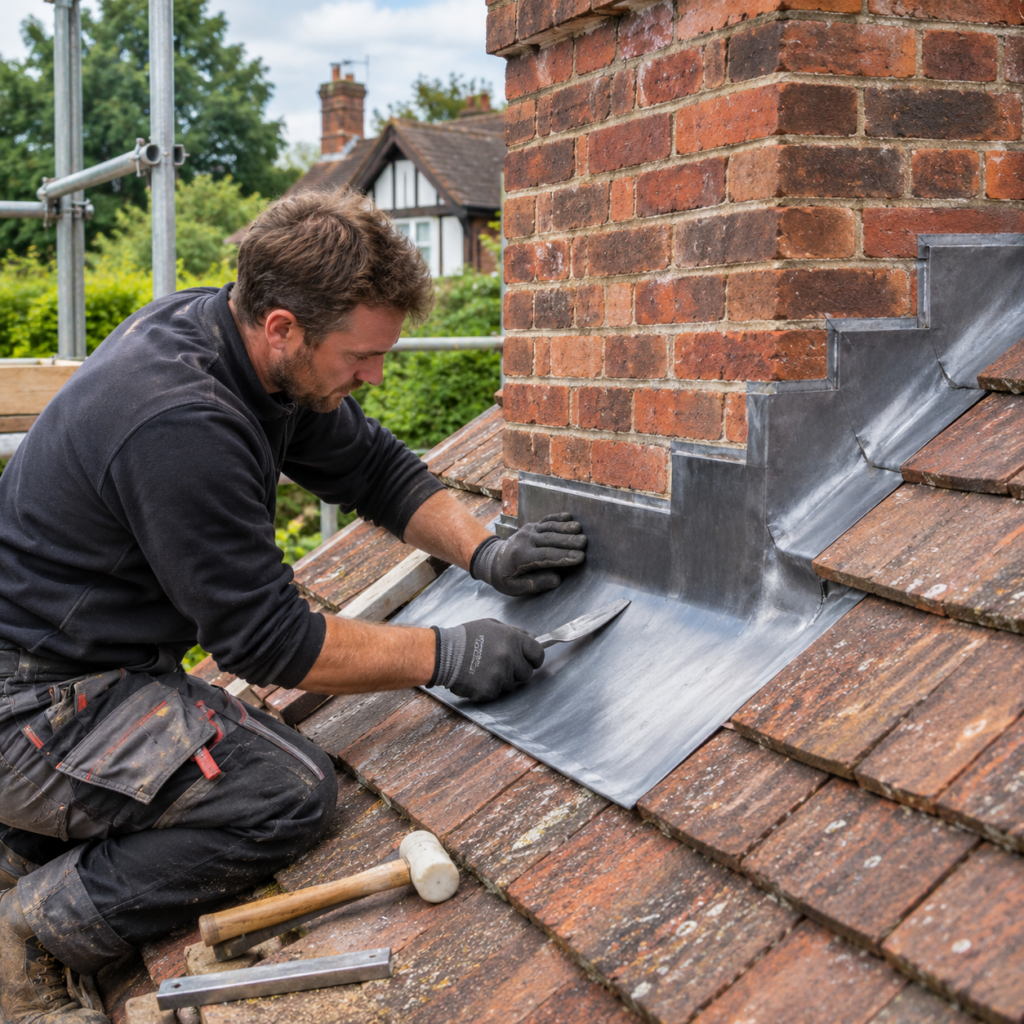
- Chimney flashing repairs and replacement
- Lead apron flashing
- Lead soakers and stepped flashing
- Roof-to-wall abutment flashing
- Lead valley repairs
- Lead-lined gutter work
- Dormer and rooflight flashing
- Parapet and roof junction repairs
- Replacement of damaged or displaced leadwork
- Investigation of leaks around roof penetrations
- Leadwork associated with new and replacement roofs
We work on traditional pitched roofs and more modern roofing systems, adapting the repair method to the construction and materials involved.
Where deterioration extends beyond the flashing itself, our wider roof repair services can address related defects affecting tiles, slates and surrounding roofing components.
Chimney Flashing Repairs in Surrey
Chimneys are among the most common locations for roofing leaks, particularly on older properties.
The junction between a chimney stack and the surrounding roof covering must remain watertight despite exposure to rainfall, wind and changing temperatures.
Lead flashing is commonly used to protect this junction, preventing rainwater from entering the gaps between the chimney masonry and roofing materials.
A typical traditional chimney may incorporate several separate leadwork components, each performing a different function.
These can include an apron at the lower edge, stepped flashing and soakers along the sides, and suitable detailing at the rear of the chimney.
If one of these components deteriorates or becomes displaced, water may enter beneath the roof covering.
Signs of damaged chimney flashing
Common warning signs include:
- Damp patches around chimney breasts
- Water staining inside the loft near a chimney
- Visible gaps between lead flashing and brickwork
- Loose or lifted leadwork
- Cracked or deteriorated mortar around flashing details
- Leaks that become worse during wind-driven rainfall
Chimney leaks are not always caused by flashing alone.
Defective pointing, damaged chimney masonry, deteriorated tiles and other nearby roofing components can produce similar symptoms.
We assess the condition of the surrounding roof and chimney junction before recommending repairs.
Where the existing lead remains serviceable, appropriate remedial work may be sufficient. Where deterioration is extensive, replacement flashing may offer a more dependable solution.
Lead Apron Flashing and Soakers
Traditional pitched roofs frequently rely on a combination of apron flashing, soakers and stepped flashing to protect junctions against water penetration.
Although these components are often grouped together under the general term lead flashing, they perform different functions.
Lead apron flashing
Apron flashing is commonly installed where a roof covering meets a vertical surface, such as the front of a chimney or an adjoining wall.
Its purpose is to direct water safely over the roofing materials below the junction.
Poorly positioned or damaged apron flashing can allow water to penetrate beneath the covering.
Lead soakers
Soakers are individual pieces of flashing installed between courses of tiles or slates where a pitched roof meets a wall or chimney.
They provide additional protection beneath the visible stepped flashing.
Their dimensions and positioning must suit the roofing material and roof pitch.
Stepped flashing
Stepped flashing follows the mortar courses of masonry alongside a sloping roof.
It helps protect the junction while allowing water to drain over the roofing materials.
A reliable installation depends on these components working together rather than relying solely on surface sealants.
Where leaks occur around a chimney or roof abutment, we investigate whether the existing flashing arrangement remains suitable and properly secured.
Lead Roof Valley Repairs
Roof valleys form where two sloping roof sections meet.
Because they collect and direct rainwater from adjoining roof slopes, valleys can carry considerable volumes of water during heavy rainfall.
Lead is commonly used to form durable valley linings, particularly on traditional pitched roofs.
However, these areas remain vulnerable to deterioration, blockages and installation defects.
Common lead valley problems
Typical issues include:
- Cracked or split lead
- Failed joints or laps
- Deteriorated fixings
- Damage caused by thermal movement
- Debris obstructing drainage
- Defective detailing beneath adjoining tiles or slates
- Previous repairs using unsuitable materials
A leaking valley can allow water to enter the roof structure over a relatively large area.
Because water may travel along underlay and structural timbers, the internal signs of a valley leak may appear some distance from the original defect.
Repairing or replacing a lead valley
The most appropriate solution depends on the condition of the existing lead, the length of the valley and the surrounding roofing materials.
Minor defects may sometimes be repaired using suitable techniques, while extensive cracking or poor original detailing may require replacement.
Correctly designed joints, appropriate allowance for movement and effective drainage are essential.
Simply covering a defective lead valley with sealant or another temporary material may not address the underlying cause of water penetration.
Roof-to-Wall Flashing and Abutment Repairs
Roof-to-wall junctions are common on houses, extensions, garages and commercial buildings.
They occur wherever a roof covering meets an adjoining wall or another vertical building element.
Without suitable flashing, rainwater can enter the junction and penetrate behind the roof covering.
This is particularly important where an extension has been added to an existing property.
The original building and the newer structure may incorporate different materials and construction details, making appropriate weatherproofing essential.
Common abutment flashing defects
Problems can include:
- Loose or displaced flashing
- Cracked mortar joints
- Inadequate flashing upstands
- Incorrectly positioned leadwork
- Deterioration around fixings
- Poor integration with the surrounding roof covering
- Movement between adjoining building elements
These defects may become especially noticeable during prolonged or wind-driven rainfall.
We assess the roof junction and surrounding construction to determine whether existing flashing can be repaired or needs replacing.
The objective is to create an effective weather-resistant detail appropriate to the building rather than simply covering visible gaps.
Leadwork Around Dormers and Rooflights
Dormer windows and rooflights introduce additional junctions into a roofing system.
These features are common on loft conversions, extensions and older properties that have been altered over time.
Where they meet the surrounding roof covering, correctly installed flashing is necessary to prevent rainwater entering the building.
Leadwork may be used around dormer cheeks, rooflight surrounds and other transitions, depending on the roofing system.
Why these areas develop leaks
Common causes include:
- Failed flashing around dormer sides
- Damaged waterproofing at rooflight junctions
- Incorrectly installed lead soakers
- Deteriorated roof coverings
- Movement around the opening
- Previous repairs using incompatible materials
Leaks around dormers and rooflights can be difficult to diagnose because condensation, defective seals and roofing faults can create similar symptoms.
We investigate the surrounding junction before recommending remedial work.
Where the main roof covering remains sound, targeted repairs may resolve the problem without requiring extensive replacement.
Leadwork on Older and Period Properties
Surrey contains a wide variety of traditional residential buildings, including Victorian terraces, Edwardian properties, cottages and older detached homes.
Many of these buildings feature pitched slate or tiled roofs with chimneys, parapets, valleys and complicated roof junctions.
Leadwork often forms an important part of their original weatherproofing system.
When maintaining an older roof, it is important to consider the existing construction rather than automatically applying methods designed for modern buildings.
Traditional roofs may incorporate materials and details that behave differently from newer systems.
For example, older properties may have solid masonry walls, traditional roof structures and original flashing arrangements.
Repairs should account for the condition of these elements and the way water is intended to drain from the building.
Where a property is listed or subject to conservation-related restrictions, additional permissions or specialist considerations may apply.
Infinite Roofing provides residential roofing services for traditional and modern properties, including repairs to roofing materials and the details connecting them.
Why Lead Flashing Cracks or Fails
Lead is a durable roofing material, but it is not immune to deterioration.
One of the most important considerations when installing leadwork is thermal movement.
Lead expands and contracts as temperatures change. If a piece is incorrectly sized or fixed in a way that restricts necessary movement, stress can develop over time.
Eventually, this may result in cracking or splitting.
Other potential causes of failure include:
- Incorrect installation
- Excessively long unsupported sections
- Inadequate allowance for expansion
- Poorly positioned fixings
- Physical damage
- Defective junction details
- Deterioration of supporting materials
- Previous inappropriate repairs
The surrounding roof covering can also contribute to problems.
For example, displaced tiles may direct water towards a junction in an unintended way, while blocked drainage may cause water to accumulate around vulnerable details.
Identifying the reason for failure is essential before undertaking replacement work.
Installing new flashing without correcting an underlying design or fixing defect could allow the same problem to develop again.
Lead Flashing Repairs or Complete Replacement?
Not every flashing problem requires complete replacement.
If the defect is limited and the existing material remains suitable for continued service, a targeted repair may provide an effective solution.
However, badly cracked, distorted or incorrectly installed leadwork may need replacing.
When repairs may be appropriate
Repair work may be suitable where:
- Damage is confined to a small area
- The surrounding leadwork remains sound
- The original installation is correctly detailed
- The defect can be reliably identified
- An appropriate repair technique is available
When replacement may be necessary
Replacement may be more appropriate where:
- Lead has cracked extensively
- Thermal movement has caused repeated failures
- The original flashing is incorrectly sized
- Fixings or supports are unsuitable
- Several previous repairs have failed
- Existing details cannot provide reliable weather protection
We consider the condition of the leadwork and surrounding roof before advising on the appropriate option.
The aim is to provide durable weatherproofing without recommending more extensive work than the property requires.
Leadwork for New and Replacement Roofs
Leadwork isn’t only required when repairing an existing roof.
It also forms an important part of many new roofing installations.
When a pitched roof is replaced, the contractor must ensure that the new covering integrates correctly with existing chimneys, adjoining walls, roof valleys and other building elements.
Old flashing may not always be suitable for reuse, particularly where materials have deteriorated or the new roof covering requires different details.
A replacement roofing project therefore provides an opportunity to assess the condition of these junctions.
Leadwork must be designed and installed to suit the roof pitch, materials, exposure and relevant industry guidance.
Correct installation is essential because even high-quality roof tiles or slates cannot prevent leaks if the surrounding junctions are poorly detailed.
We can incorporate appropriate flashing and leadwork as part of wider roofing services and replacement projects.
Commercial Roofing Leadwork
Leadwork is also used on commercial properties, particularly older buildings with traditional pitched roofs, masonry parapets and complicated roof junctions.
Retail premises, offices, converted buildings and other commercial properties may contain lead-lined gutters, valleys and flashing details requiring maintenance.
Defects can lead to water penetration affecting internal finishes, electrical installations and business operations.
Where a commercial building develops a leak, early investigation may help prevent more extensive damage and disruption.
Commercial leadwork repairs can involve additional considerations around safe access, building occupancy and coordination with other maintenance activities.
We assess the roofing problem and recommend work appropriate to the property’s construction and operational requirements.
How Much Do Lead Flashing Repairs Cost?
The cost of repairing or replacing leadwork depends on the nature of the defect and the amount of work required.
A small repair to an accessible flashing detail involves different materials and labour from replacing extensive leadwork around a large chimney or roof valley.
Factors influencing the cost include:
- Type and location of the flashing
- Size of the affected area
- Condition of existing materials
- Required lead thickness and detailing
- Roof height and accessibility
- Scaffolding requirements
- Complexity of surrounding junctions
- Whether adjoining roofing materials need removing
Safe access can represent a significant proportion of the cost, particularly where the work involves a tall chimney or difficult roof location.
For this reason, online estimates may not accurately reflect the requirements of an individual property.
A professional assessment allows the scope of the work to be established before a quotation is provided.
Our Approach to Leadwork and Flashing Repairs
A successful repair begins with understanding how water is entering the building and whether the flashing is responsible.
Our approach focuses on identifying the problem before recommending the necessary work.
Initial assessment
We discuss the symptoms, property type and any previous roofing repairs.
Information about when leaks occur can help identify possible causes.
Roof inspection
Where appropriate, we inspect the flashing, adjoining roof covering, masonry junctions and relevant drainage details.
Repair recommendations
We explain the likely cause of the problem and whether targeted repairs or replacement leadwork would be appropriate.
Quotation
We outline the proposed scope and any relevant access requirements.
Completion
The agreed repairs are carried out using materials and methods appropriate to the existing roofing system.
The objective is to restore reliable weather protection while preserving sound roofing components wherever practical.
Leadwork and Roof Flashing Across Surrey
Infinite Roofing is based in Epsom and provides roofing services across the surrounding parts of Surrey.
Our main coverage includes:
- Epsom
- Leatherhead
- Cheam
- Banstead
- Ewell
- West Ewell
- Tadworth
- Kingswood
- Ashtead
We work on residential and commercial properties, including traditional pitched roofs, extensions and buildings with complicated roof junctions.
If your property is outside these areas, contact us with your postcode to check coverage.
Frequently Asked Questions About Roof Flashing
Can damaged lead flashing cause a roof leak?
Yes. Cracked, displaced or incorrectly installed lead flashing can allow rainwater to enter around chimneys, roof junctions and adjoining walls, even when the surrounding tiles remain in good condition.
Can lead flashing be repaired without replacing it?
Sometimes. Localised defects may be repairable if the remaining leadwork and original installation are sound. More extensive cracking or repeated failures may justify replacement.
How long does roofing leadwork last?
Properly specified and installed leadwork can provide many decades of service. Its actual lifespan depends on installation quality, detailing, exposure, movement and maintenance.
Why does my roof leak around the chimney?
Potential causes include defective lead flashing, deteriorated mortar, damaged tiles or faults in the chimney structure. An inspection is needed to identify the actual source.
Do you repair lead roof valleys?
Infinite Roofing can assess leaking roof valleys and advise on suitable repairs or replacement where necessary. The appropriate approach depends on the existing valley construction and condition.
Do you cover Leatherhead, Cheam and Banstead?
Yes. Infinite Roofing is based in Epsom and covers Leatherhead, Cheam, Banstead and surrounding parts of Surrey.
Need Leadwork or Roof Flashing Repairs in Surrey?
If you have noticed a leak around a chimney, damaged flashing, problems with a roof valley or water penetration near an extension, contact Infinite Roofing.
We provide leadwork and roof flashing services throughout Epsom and surrounding Surrey locations, helping property owners address vulnerable roofing junctions before further deterioration occurs.
Whether the problem involves a minor defect or extensive deterioration, we can discuss your requirements and advise on the appropriate next step.
Call 01737 210204 or 07926 892502, or email info@infiniteroofing.co.uk to request a quotation for leadwork and roof flashing in Surrey.
Need some help?
Our team of highly skilled roofers are waiting for your call


